Things to do · Bandipur
Magar & Newar Culture of Bandipur
How Newar traders and Magar hill farmers shaped Bandipur — its bazaar, villages, temples and living customs.
Bandipur's culture is a meeting of two peoples: the Newar traders who built its bazaar and the Magar hill farmers who work the ridges around it. The town on the spine is a Newar creation — a 19th-century trading post whose carved merchant houses and shrines survive almost intact — while the villages spread across the surrounding spurs are largely Magar. Understanding that pairing is the key to reading Bandipur, and it sets the town apart from the purely Newar centres of the Kathmandu Valley.
The Newar bazaar town
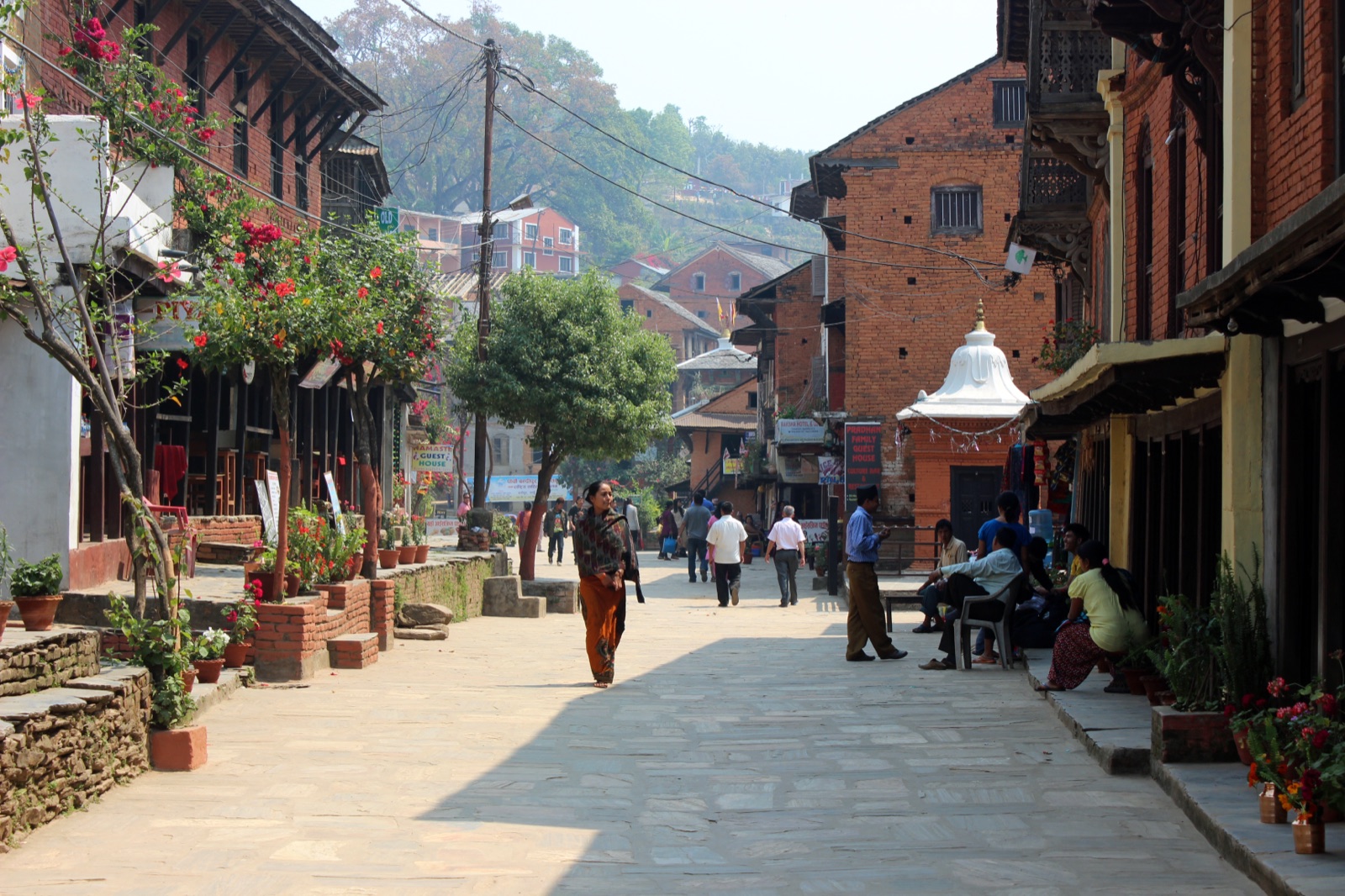
Newars, the historic inhabitants of the Kathmandu Valley, are renowned across Nepal as traders, artisans and temple-builders. In the 1800s, with the old route between India and Tibet passing nearby, Newar merchants established a bazaar on the Bandipur ridge to handle the commerce. The town flourished, and its prosperity is written into the architecture: tall brick houses with finely carved wooden windows, shuttered shopfronts, inner courtyards and small street shrines, all lined along a flagstone main street. When the Prithvi Highway bypassed the ridge in the late 20th century, trade moved on and the town was, in effect, preserved — which is why you can still walk a near-intact Newar streetscape today on the car-free Newari bazaar.
Magar villages on the ridges
Beyond the bazaar, the hills belong largely to the Magar, one of Nepal's most numerous indigenous groups and a community with a long history in the central hills. Their settlements are immediately recognisable by their distinctive round, thatched stone houses, terraced fields and a farming rhythm that has changed slowly over generations. The best place to see this within reach of Bandipur is Ramkot, a traditional Magar village, a ridge walk west of town past round houses, drying grain and an old fort site. The Magar also have their own languages, dress and festivals, distinct from the Newar traditions of the bazaar below.
Temples, festivals and daily life
Religion in Bandipur blends Hindu and Buddhist practice, as it does across much of hill Nepal. The hilltop shrine at Thani Mai temple, best known to travellers as the sunrise viewpoint, is a working place of worship, as is the older Khadga Devi temple in the bazaar, focus of local devotion and seasonal rites. National festivals such as Dashain and Tihar fill the streets in autumn, while Newar and Magar communities also keep their own observances. For the wider picture, see our guides to Newar culture and heritage in Nepal and to Gurung and Magar culture.
Seeing it respectfully
This living culture is best met gently. Dress modestly at temples, remove shoes where asked, and seek permission before photographing people or pujas. In Magar villages, remember these are working farms and homes, not attractions — a greeting and an unhurried, respectful presence are welcome. To weave the heritage and the surrounding nature into one trip, follow our Bandipur heritage and nature cluster, and start planning with the wider Bandipur travel guide.
Frequently asked questions
Is Bandipur a Newar or a Magar town?+
Both, in different ways. The bazaar itself was built up by Newar traders from the Kathmandu Valley in the 19th century, so its merchant houses and shrines are Newar. The farming villages on the surrounding ridges, such as Ramkot, are largely Magar, one of Nepal's larger indigenous communities.
Why did Newar traders settle in Bandipur?+
Bandipur sat on a trade route between India and Tibet. Newar merchants, famed across Nepal for commerce, established a bazaar here in the 1800s to handle the passing trade, and the town grew prosperous until the Prithvi Highway later bypassed the ridge.
What can travellers see of Bandipur's culture?+
The carved wooden windows and shuttered merchant houses of the bazaar, working temples such as Khadga Devi and Thani Mai, the round thatched houses of Magar villages like Ramkot, and the festivals and daily life that still animate the streets and ridges.
How should visitors behave at temples and in villages?+
Dress modestly at shrines, remove shoes where asked, and ask before photographing people or pujas. In small villages a quiet, respectful presence and a greeting go a long way, as these are working communities rather than open-air museums.