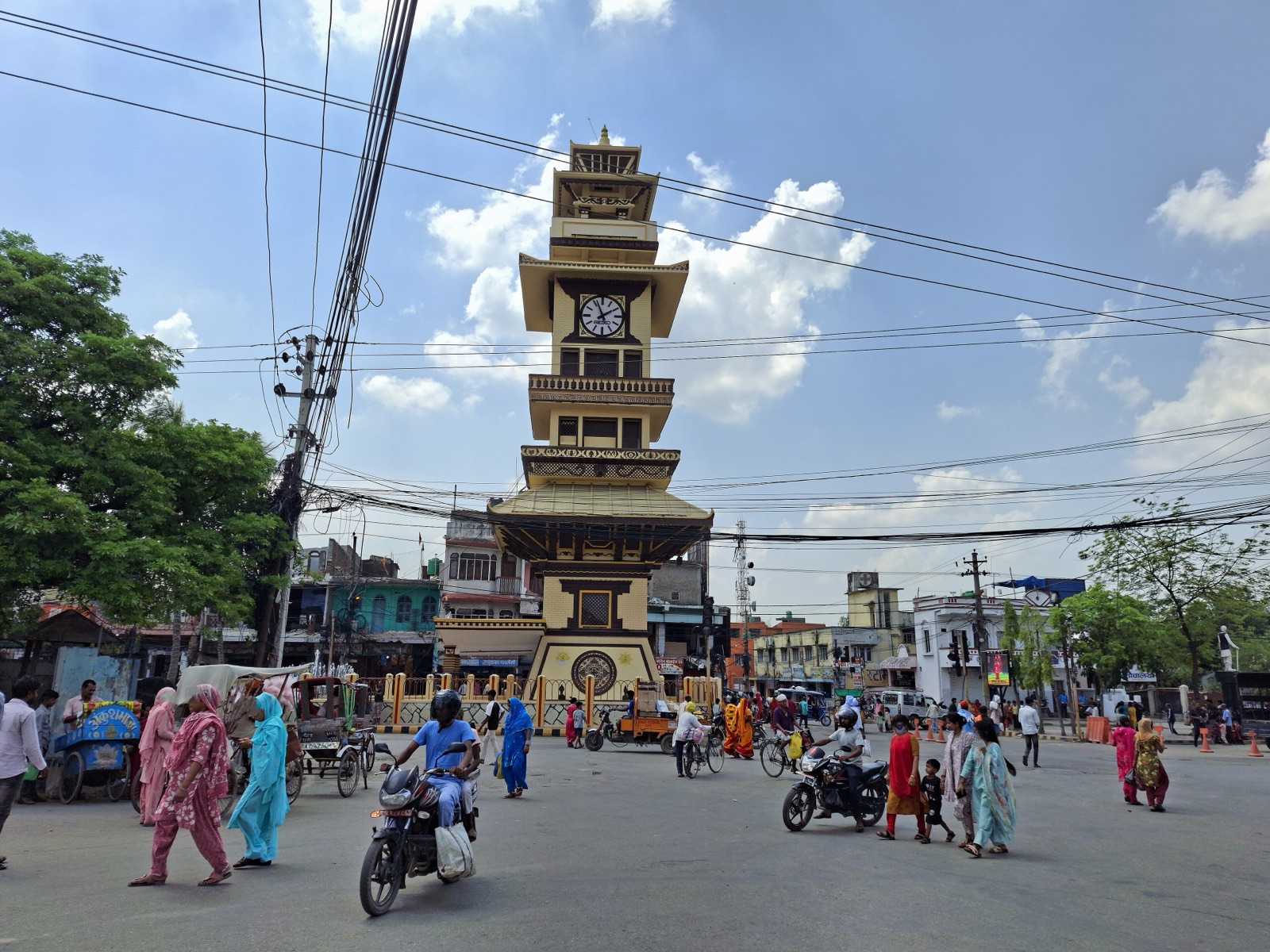
Photo: Saddam19, CC BY-SA 4.0 via Wikimedia Commons
Madhesh Province, Nepal
Birgunj Travel Guide
Nepal's busiest southern gateway and commercial capital, set in Parsa on the Indian border, famed for the Ghantaghar clock tower, the Gahawa Mai Temple, the Birgunj–Raxaul crossing and its role as the main road hub for Kathmandu-bound travellers.
Birgunj is Nepal's busiest southern gateway and its informal commercial capital, sprawled across the flat Terai plains of Parsa district right against the Indian border. Bustling, trade-driven and resolutely commercial, it is a city of trucks and rickshaws, border bazaars and temple bells — and the main road artery through which countless travellers and goods flow north toward Kathmandu.
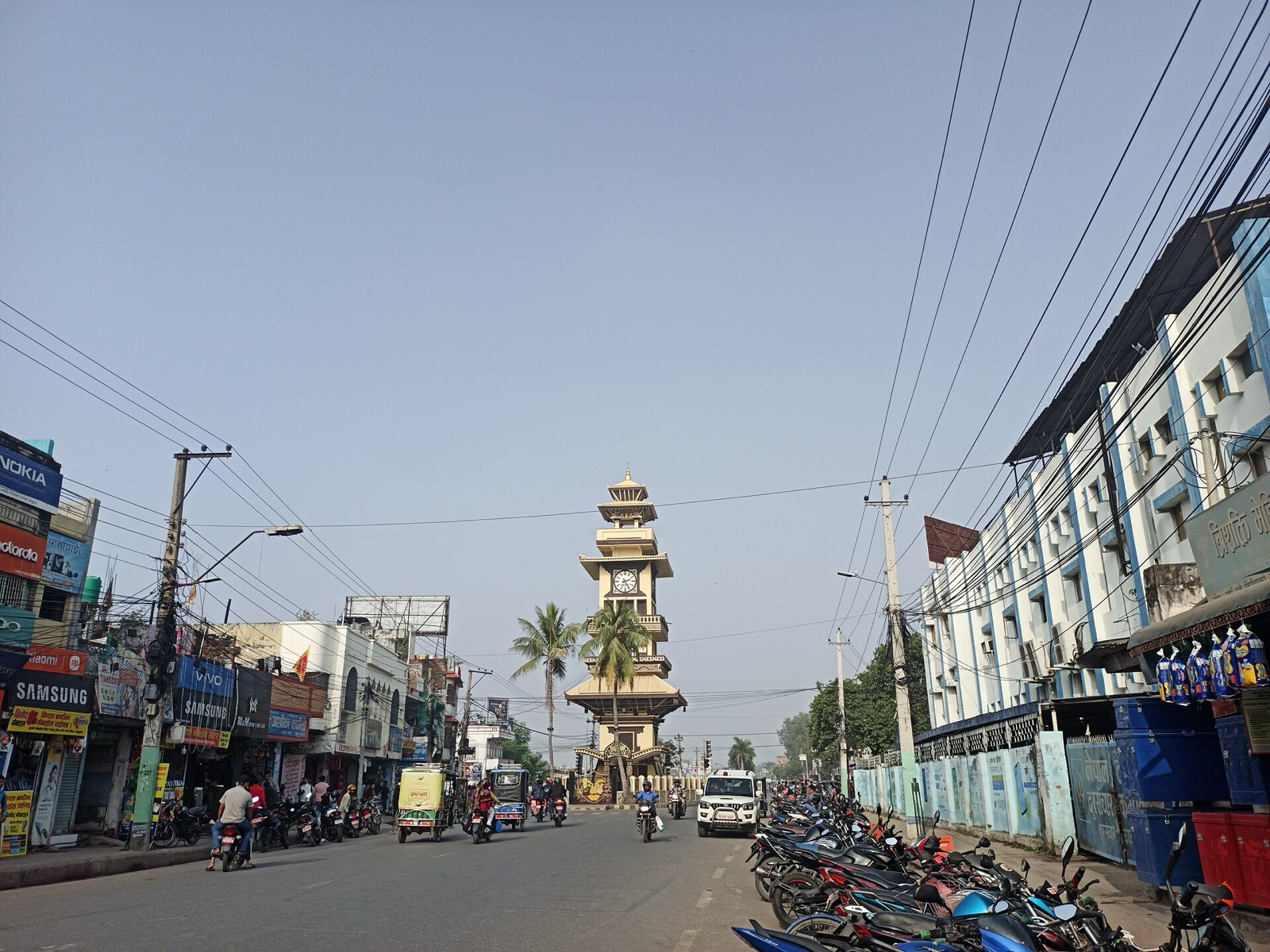
The city's best-known landmark is the towering Ghantaghar clock tower, the symbol of Birgunj at the heart of the bazaar. Its spiritual centre is the revered Gahawa Mai Temple, a goddess shrine that draws pilgrims from across the Terai and the nearby Indian plains. Wander the trade-driven lanes of the Birgunj bazaar, pass beneath the ornate Shankaracharya Gate that marks the road into the city, and watch the constant movement at the Birgunj–Raxaul border crossing into India. Browse the full pick in our top things to do in Birgunj and the dedicated guide to the city's cross-border trade.
For most travellers, Birgunj is above all a junction — see our guide to using the city as the gateway to Kathmandu, Pokhara and Janakpur, or escape the bustle to the sal forests of nearby Parsa National Park. To plan the practicalities, see how to get to Birgunj, where to stay in Birgunj and the best time to visit Birgunj. For wider context, dip into the Terai lowlands, the Nepal visa rules for border arrivals and the best places to visit in Nepal. Below are our picks for what to see, eat and do.
Where to stay in Birgunj

What to do in Birgunj


Shopping & markets in Birgunj

Wildlife & nature in Birgunj

Getting around in Birgunj


Plan your trip in Birgunj

Frequently asked questions
Why is Birgunj famous?+
Birgunj is Nepal's busiest southern gateway and its commercial capital, set in Parsa right against the Indian border. It is famed for the landmark Ghantaghar clock tower, the revered Gahawa Mai Temple, the Birgunj–Raxaul crossing into India and its role as the main road hub for travellers heading to Kathmandu, Pokhara and Janakpur.
How many days do you need in Birgunj?+
Half a day to a day covers the city itself — the Ghantaghar, Gahawa Mai Temple, the Shankaracharya Gate and the bazaars. Most travellers use Birgunj as a transit stop while crossing the border or while heading north to Kathmandu, often staying just one night.
How do you get to Birgunj?+
Birgunj sits on the East–West Highway near the Indian border and at the foot of the Tribhuvan Highway to Kathmandu, so most people arrive by road. From India it is reached via the Birgunj–Raxaul crossing, which links to the Indian rail network. The nearest airport is at Simara, a short drive north.
Is Birgunj worth visiting?+
Yes — Birgunj offers a vivid taste of Terai border culture, the historic Ghantaghar, the Gahawa Mai Temple and easy access to Parsa National Park. Many visitors pass through en route to Kathmandu or into India, but the city's bazaars, temples and frontier energy reward a short stop.
When is the best time to visit Birgunj?+
October to March brings the most comfortable weather, as Birgunj sits in the hot Terai plains. Summer temperatures from April to June can climb past 40°C, and the monsoon is hot and humid, so the cool, dry winter months are by far the most pleasant for sightseeing.