Photo: SHnehaa, CC BY-SA 4.0 via Wikimedia Commons
Food & dishes · Bhaktapur
Juju Dhau: Bhaktapur's King of Yoghurt
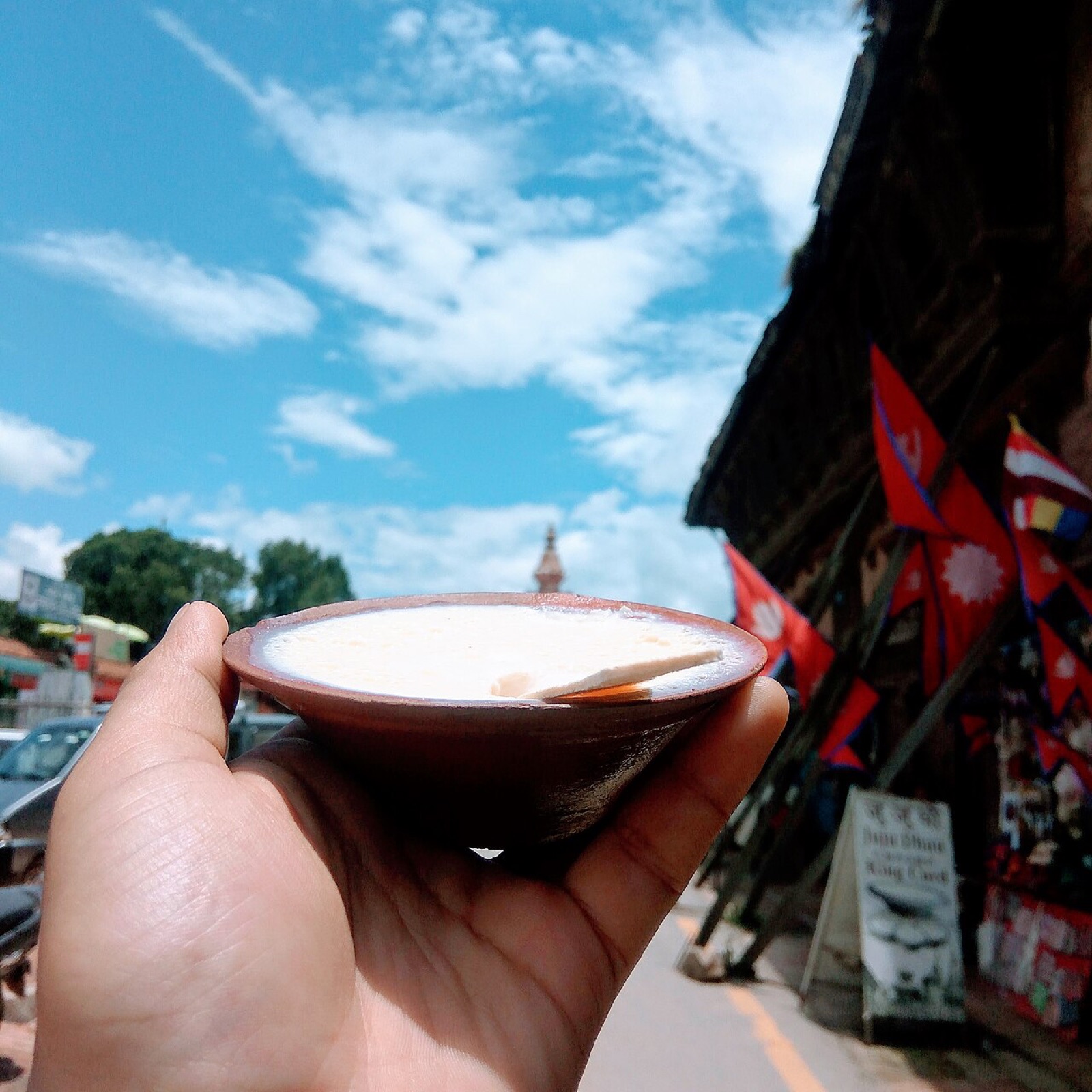
Bhaktapur's 'king of yoghurt' — thick, lightly caramelised buffalo-milk curd set in red clay pots.
In a country that loves its yoghurt, one curd wears the crown — and it comes from Bhaktapur. Juju dhau, literally "king of yoghurt" in the Newari language, is the city's most famous taste: a thick, sweet, lightly caramelised buffalo-milk curd set in humble red clay pots. A pot of it, eaten chilled in a brick-paved square, is one of the simple pleasures of a day in the old town.
The short answer
Juju dhau is a rich buffalo-milk yoghurt from Bhaktapur, reduced and sweetened, then set in porous clay pots that make it dense and creamy with a faint caramel edge. Eat it chilled, straight from the pot. The best place to taste it is among the dairy shops and Newari food stalls of Bhaktapur around Durbar Square and Taumadhi.
How it's made
The magic of juju dhau lies as much in the method as the milk:
- Buffalo milk is boiled and reduced to concentrate the fat and solids.
- Sugar is stirred in, sometimes with a pinch of cardamom, cloves or cinnamon.
- A spoon of starter curd is added, then the warm milk is poured into unglazed clay pots.
- The porous terracotta wicks away whey as it sets, leaving a thick, custard-like yoghurt.
That reduction, and the moisture-absorbing pots, are what set juju dhau apart from everyday dahi. The pots themselves come from Bhaktapur's traditional potters — the same hands you can watch at work in Pottery Square, which ties this dish directly to the city's living crafts.
Why Bhaktapur is its home
Juju dhau is a Newari speciality of Bhaktapur, woven into the town's festivals, weddings and rituals. It often features in ceremonial feast platters and is offered to guests as a mark of hospitality. It is a regular treat during the city's celebrations, including the New Year crowds of Bhaktapur's Bisket Jatra, and turns up at family gatherings across the old quarters near Dattatreya Square. To understand its place in the wider table, see our guide to Newari cuisine.
Where and how to enjoy it
Bhaktapur is the undisputed home of juju dhau. Dairy shops around Durbar Square and Taumadhi Square sell it fresh in clay pots, and it pairs perfectly with a wander through the city's squares. A few tips help you enjoy it at its best:
- Eat it fresh — the porous pot means the curd is best within a day or two of setting.
- Eat it chilled and plain, scooped straight from the pot, to taste the caramel note.
- Don't expect it to travel. The clay pot is part of the experience but fragile, so it does not carry well over long distances.
- Compare it with ordinary dahi if you can — the king is noticeably thicker, sweeter and richer.
Cool, dense and faintly caramelised, juju dhau is the dessert that turns a day trip into a memory. Make it part of your visit using our Bhaktapur crafts, squares and festivals collection, and plan the right season with our best time to visit Nepal guide.
Frequently asked questions
What is juju dhau?+
Juju dhau means 'king of yoghurt' in Nepal Bhasa. It is a rich, thick, lightly sweet curd from Bhaktapur, made from buffalo milk and set in unglazed clay pots that give it a creamy, almost custard-like texture and a faint caramel note.
Why is juju dhau set in clay pots?+
The unglazed terracotta pots absorb excess whey as the curd sets, concentrating it and helping it firm up. The clay also keeps it cool and adds a subtle earthy character. Those pots are made by Bhaktapur's own traditional potters, linking the dish to the city's crafts.
Where can I try juju dhau in Bhaktapur?+
Dairy shops around Durbar Square, Taumadhi Square and the old-town lanes sell juju dhau fresh in clay pots. It is widely available across Bhaktapur and is best eaten chilled, straight from the pot, as a dessert or refreshing snack.
Is juju dhau sweet?+
Yes, lightly. The milk is reduced with sugar and often a hint of cardamom or other spice, giving a gently sweet, caramelised flavour. It is eaten as a dessert or treat rather than a plain savoury yoghurt.
What does "juju" mean in Newari?+
In Nepal Bhasa, the Newari language, "juju" means king — it was the royal title used for the Malla kings who once ruled Bhaktapur. "Dhau" simply means yoghurt or curd, so the name crowns this rich, ceremonial curd as the king of all yoghurts.