Photo: Rajesh Dhungana, CC BY-SA 4.0 via Wikimedia Commons
Things to do · Bhaktapur
The Peacock Window & Bhaktapur Woodcarving
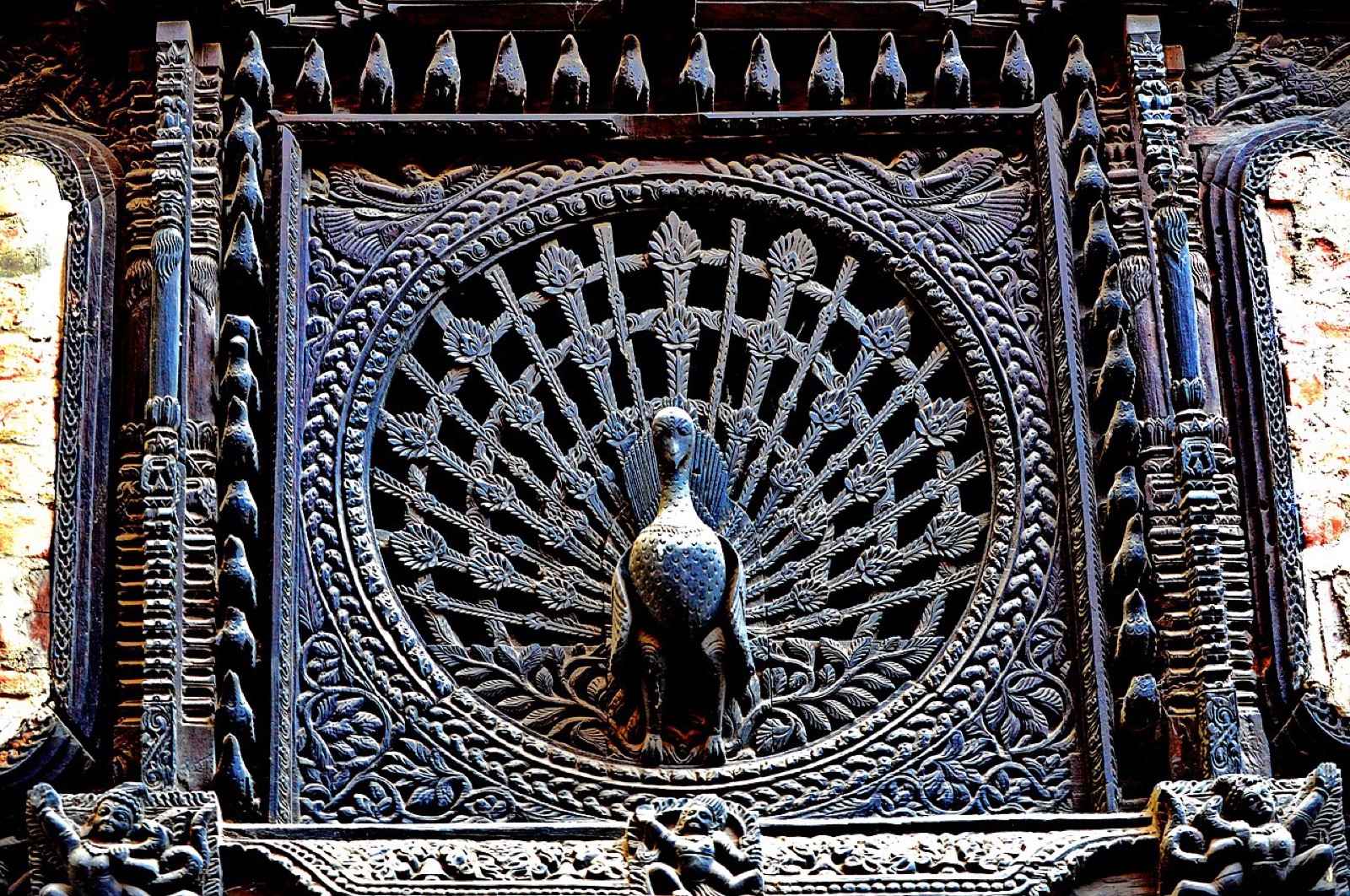
Nepal's most celebrated woodcarving — the fanned 15th-century Peacock Window at Pujari Math, Bhaktapur.
- Address
- Pujari Math, near Dattatreya Square, Bhaktapur 44800
The Peacock Window is the single most celebrated piece of woodwork in Nepal — a fanned wooden lattice, carved around the 15th century, set into the brick wall of Pujari Math near Dattatreya Square. A peacock spreads its tail at the centre while finely worked struts radiate outward, a small masterpiece that has become a symbol of Bhaktapur's woodcarving genius.
What you're looking at
The window is a jharokha-style lattice, carved in dark hardwood, in which a central peacock fans a semicircle of feathers framed by rows of smaller windows and floral motifs. It is the showpiece of Pujari Math, a historic priests' residence and former monastery whose walls bristle with carved windows and doorways. The craftsmanship is astonishing up close — the layered depth, the precision of the lattice and the lifelike turn of the bird's neck all reward a slow look. Part of Pujari Math now houses a small woodcarving museum displaying struts, panels and figures from across the valley.
Bhaktapur and the art of woodcarving
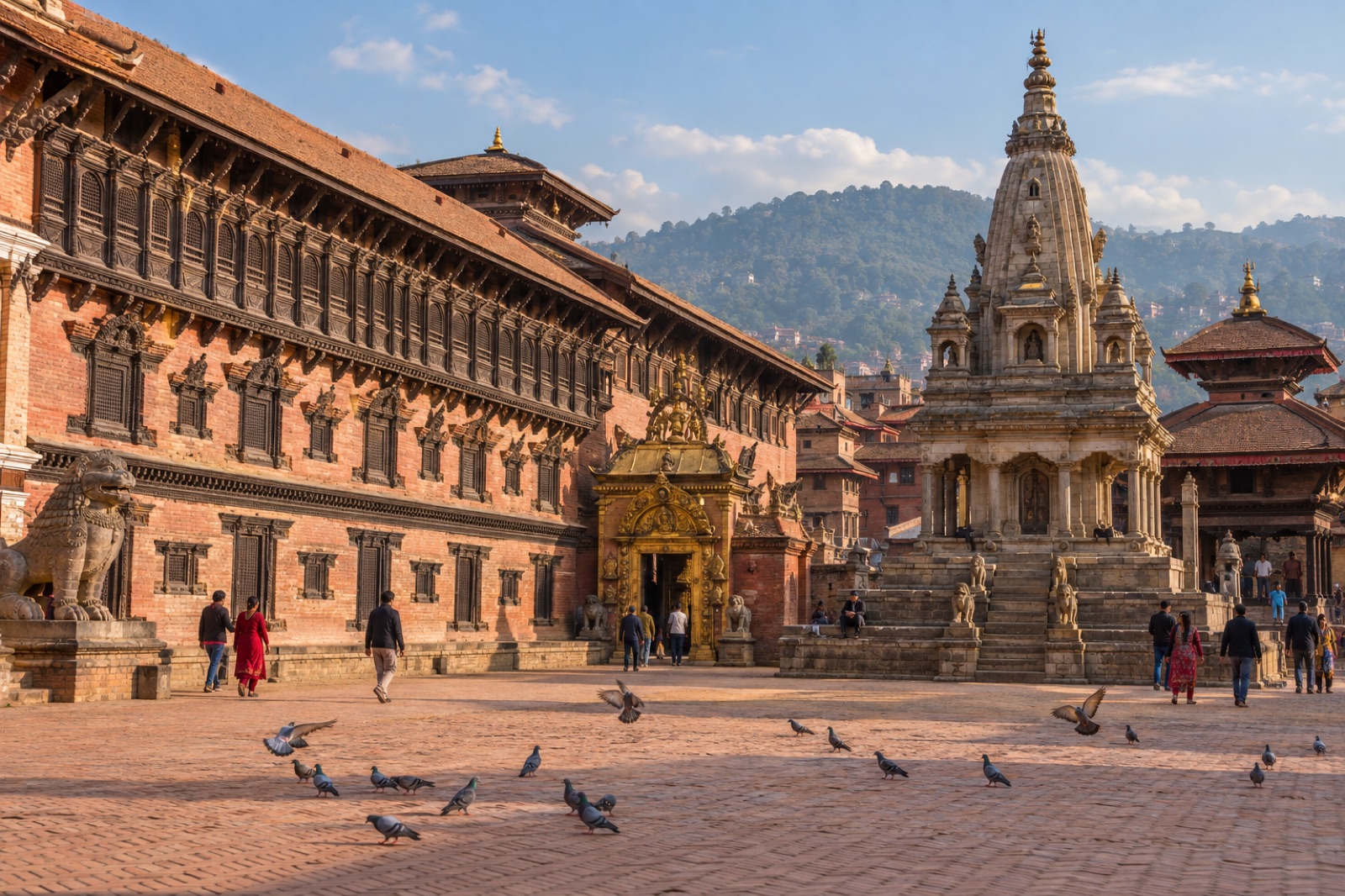
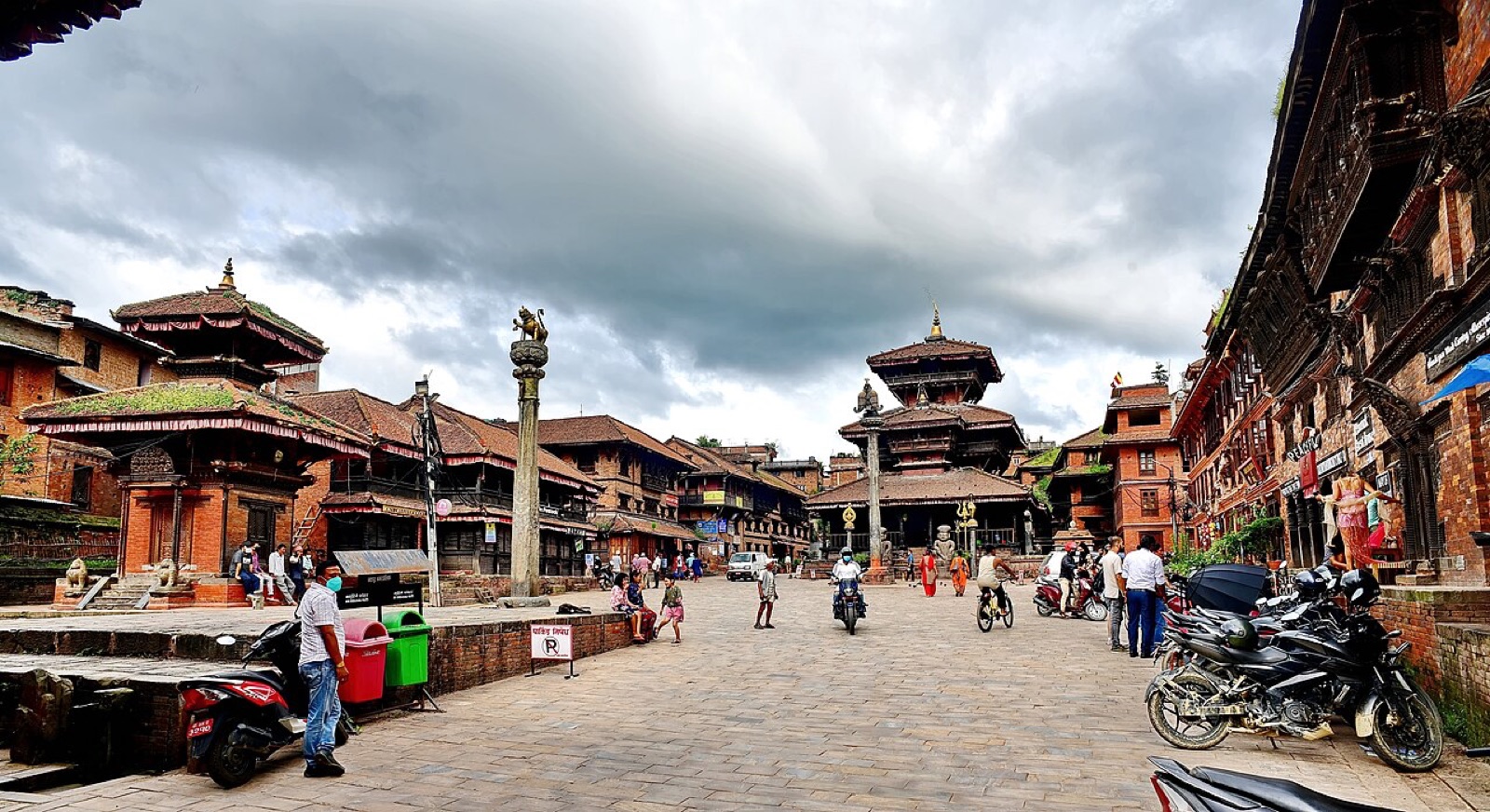
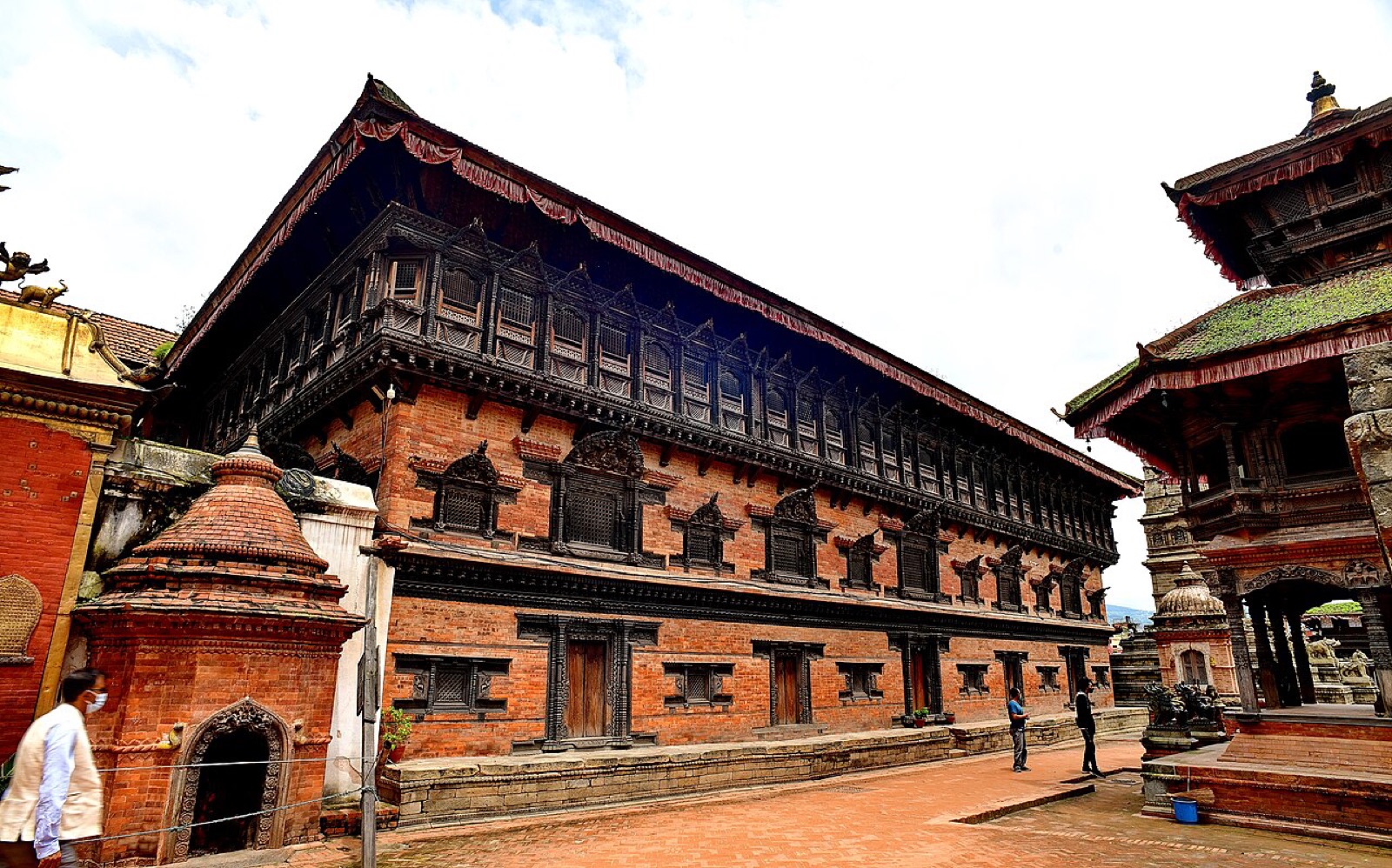
Woodcarving is one of Bhaktapur's two great living crafts, alongside the pottery of Pottery Square. During the Malla kingdoms, the city's master carvers produced the elaborately worked windows, struts and torana arches that still define Newar architecture across the Kathmandu Valley. The grandest concentration is the 55-Window Palace on Durbar Square, a long facade of carved bays, but the Peacock Window is the most refined single piece. The tradition is far from dead: carving workshops near Dattatreya Square still produce windows and panels by hand, and you can see how this craft fits the wider story in our guide to Nepali handicrafts and souvenirs.
How to visit
The Peacock Window sits inside Bhaktapur's heritage zone, reached after paying the foreigner entry fee at the city gates. From Dattatreya Square it is a one-minute walk down a narrow side lane toward Pujari Math — follow the signs, as the entrance is easy to overlook among the brick houses. The window is on a public lane and free to view; only the woodcarving museum inside may charge a small fee.
Tips
- Look for the signs to Pujari Math behind Dattatreya Square — the window is set into a side wall, not facing the main plaza.
- Visit in the late afternoon, when warm light catches the carving and tour groups thin out.
- Pair it with the 55-Window Palace to compare Bhaktapur's two great showcases of woodwork.
- Browse the carving workshops nearby, where artisans still chisel traditional lattice windows you can watch being made.
To place the Peacock Window in context, read about Newar culture and heritage, and explore the city's wider traditions in our Bhaktapur crafts, squares and festivals collection.
Featured in
More what to do in Bhaktapur
Frequently asked questions
What is the Peacock Window in Bhaktapur?+
The Peacock Window is an intricately carved wooden lattice set into the wall of Pujari Math, just off Dattatreya Square. Dating from around the 15th century, it shows a peacock with a fanned tail radiating outward and is widely regarded as the finest example of woodcarving in Nepal.
Where is the Peacock Window located?+
It is on a narrow side lane behind Dattatreya Square, set into the brick wall of Pujari Math, a historic priests' residence at the eastern end of Bhaktapur's old town. Signs near the square point the way, as it is easy to miss.
How old is the Peacock Window?+
It is generally dated to around the 15th century, during Bhaktapur's Malla period, when the city was a leading centre of Newar woodcraft. It has been carefully preserved and remains in its original setting on the wall of Pujari Math.
Is there an entry fee to see the Peacock Window?+
The window itself sits on a public lane and can be viewed for free once you are inside Bhaktapur's heritage zone, for which foreigners pay the city entry fee at the gates. A small charge may apply to enter the woodcarving museum housed inside Pujari Math.