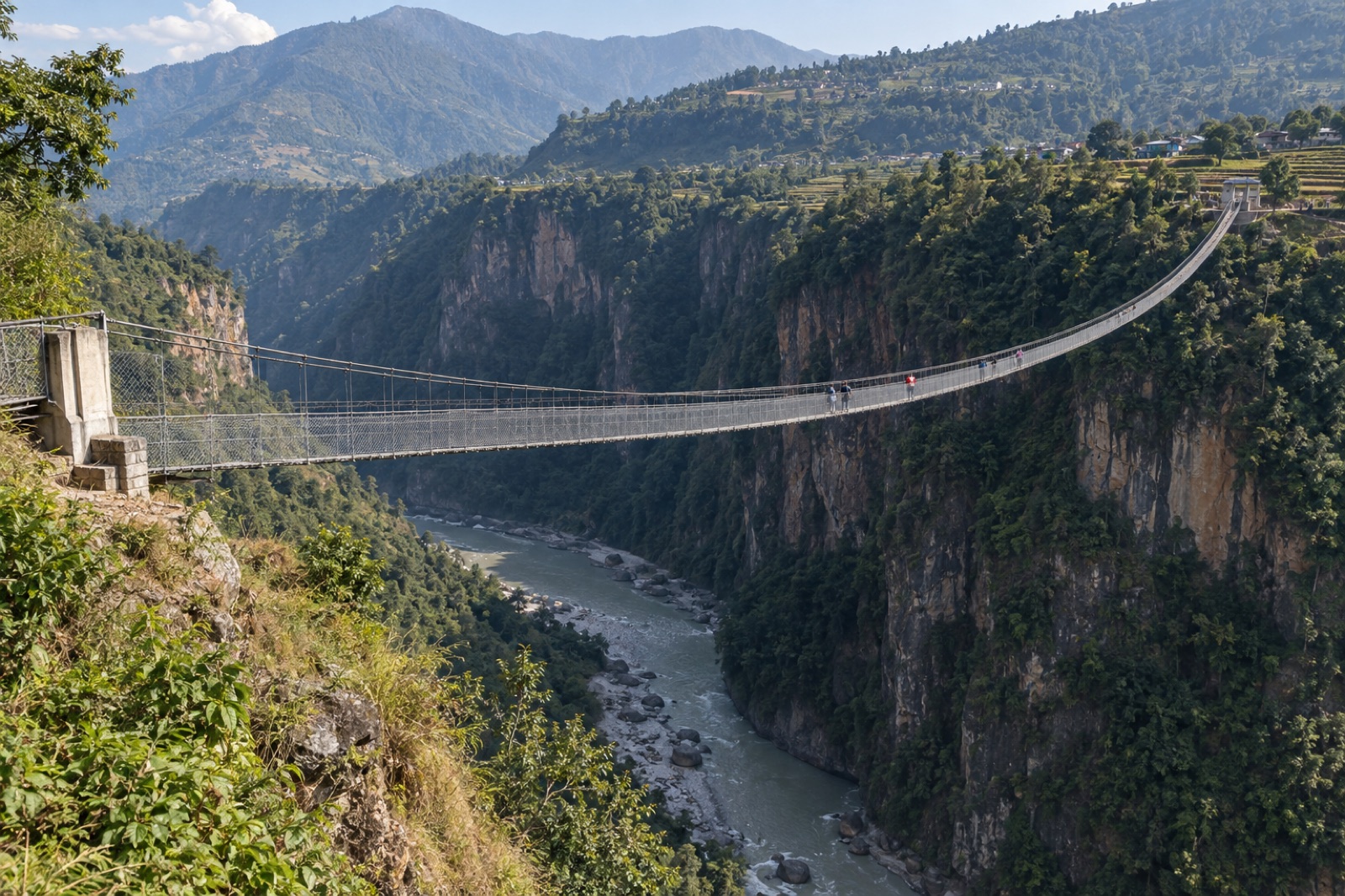
Things to do · Chitlang
Chitlang Salt-Trade Trail
Walk the old salt-trade trail through Chitlang valley, once a link on the Kathmandu trade road.
The Chitlang salt-trade trail is a living thread of history running through this Newari valley. Long before highways, Tibetan salt and other goods were carried south by porters and pack animals over the hills toward the Kathmandu Valley, and Chitlang sat on one of these old trading corridors. Today you can walk sections of the route, tracing the same paths between villages, shrines and old resting points.
Why this route mattered
Before motor roads reached the hills, salt was a precious commodity in Nepal, much of it carried south from Tibet by porters and pack animals along Himalayan trade corridors. These routes did more than move salt: they carried grain, cloth, metalware and news, and the villages along them grew prosperous as staging posts. Chitlang's position on one such corridor, just over the ridge from the Kathmandu Valley, helped shape the valley's relative wealth, its temples and its Newari trading character. Walking the trail is a way of reading that history in the landscape itself — in the worn stone steps, the old rest stops and the line the path takes over the hills.
Walking the route
Within the valley the trail is gentle to moderate, following stone and earth paths past terraced fields, water mills and the valley's Newari temples and heritage. A homestay host or local guide can point you to the most atmospheric stretches and bring the history alive — who travelled here, what they carried and why this crossing mattered.
The bigger crossing
The classic, more demanding version retraces the trade road over Chandragiri, connecting the valley with Thankot on the Kathmandu side. This is the route described in our Thankot–Chandragiri–Chitlang hike, and arriving on foot this way is the most evocative way to enter the valley.
Good to know
- Walk with a local guide to find the genuine old-route sections and hear the stories.
- Carry water and snacks; valley shops are small and few.
- Wear proper footwear — stone paths can be slippery, especially after rain.
- Combine the walk with a visit to the goat-cheese farm for a full day on foot.
Base yourself in the community homestays to walk the trail at a relaxed pace. For more walking near the capital, see the best day hikes near Kathmandu and our overview of the culture and people of Nepal.
Featured in
More what to do in Chitlang

Frequently asked questions
What is the Chitlang salt-trade trail?+
It is part of the historic trade route through Chitlang that, in centuries past, carried Tibetan salt and other goods over the hills toward the Kathmandu Valley. Walking sections of it links the valley's villages, temples and old resting points.
Can you walk the salt trail today?+
Yes — sections of the old route survive as walking trails through the valley and over the surrounding ridges. A homestay host or local guide can show you the most atmospheric stretches and explain the history along the way.
How hard is the salt-trail walk?+
Within the valley the walking is gentle to moderate on stone and earth paths. The longer crossing over Chandragiri toward Thankot is more demanding, with a sustained climb, and is usually done as a half-day hike.
Why was salt traded through here?+
Before modern roads, salt from Tibet was a vital commodity carried south by porters and pack animals along Himalayan trade routes. Chitlang sat on one such corridor linking the hills with the markets of the Kathmandu Valley.