Wildlife · Dhangadhi
Swamp Deer and Tigers of Suklaphanta
The famous swamp-deer herd, tigers, elephants and Bengal florican of Suklaphanta — a far-west safari guide.
Suklaphanta National Park is far-western Nepal's great wildlife stage, and its wildlife is led by two icons: the swamp deer that crowd its grasslands in their hundreds, and the Bengal tigers that hunt them. This guide explains what lives in the park and how to plan a safari from Dhangadhi — the practical details of access are in our Suklaphanta National Park pin.
The headline: swamp deer
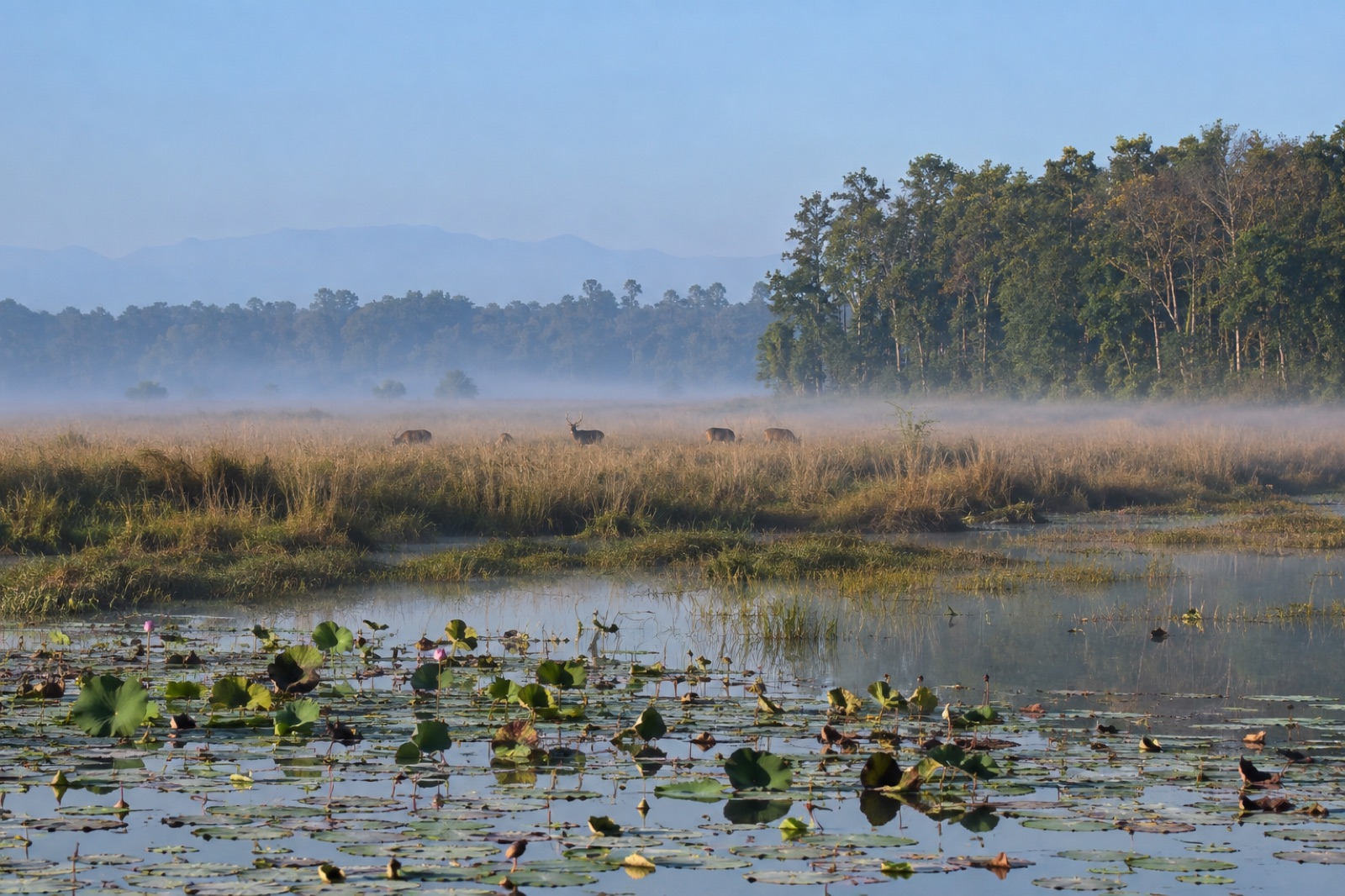
Suklaphanta is named for its phantas, the open grasslands, and the greatest of them — the Shukla phanta — hosts one of the world's largest herds of swamp deer (barasingha). At dawn, the antlered herd spreads across the grass in a spectacle found almost nowhere else, a vital stronghold for a species under pressure across its range. Watching the herd graze the phanta beneath the morning light is the defining experience of the park.
Tigers and other predators
Where there are deer, there are tigers. Suklaphanta protects a population of Bengal tigers that move through the grass and forest in search of prey, along with leopards. Sightings are never guaranteed in such a wild, quiet park, but the grasslands give good odds of tracks, alarm calls and the thrill of the search — a more solitary tiger country than the busier reserves of Bardia and Chitwan.
A wider cast
The park is far more than deer and tigers. Wild elephants roam the forest, the rare hispid hare shelters in the grass, and wild boar and several deer species share the habitat. Birdlife is outstanding, with over 400 species recorded, including the globally threatened Bengal florican, a grassland speciality that makes Suklaphanta a magnet for serious birders — part of the wider wildlife and wetlands of the far-west Terai.
Planning your safari
- Base: Stay in Dhangadhi or Mahendranagar and arrange a jeep safari with a licensed guide through the park office.
- Timing: Dawn and dusk game drives are best; winter (November to February) is the prime season — see the best time to visit Dhangadhi.
- Bring: Binoculars for the florican and waterbirds, plus sun protection for the open phantas.
- Read on: For context, browse the wildlife of Nepal and the national parks of Nepal.
Frequently asked questions
Why is Suklaphanta famous for swamp deer?+
Suklaphanta National Park protects one of the world's largest herds of swamp deer (barasingha), which gather in spectacular numbers on its open grasslands, or phantas. The huge concentration of this threatened species on the Shukla phanta is the park's defining wildlife sight.
Are there tigers in Suklaphanta?+
Yes. Suklaphanta protects Bengal tigers, which hunt the swamp deer and other prey across the grasslands and forest. Sightings are never guaranteed, as the park is wild and lightly visited, but the grasslands offer good chances of tracks, alarm calls and, with luck, a tiger.
What other animals live in Suklaphanta?+
Beyond swamp deer and tigers, the park holds wild elephants, leopards, the rare hispid hare, wild boar and several deer species. Birdlife is exceptional, with over 400 species recorded, including the globally threatened Bengal florican on the grasslands.
How do you go on safari at Suklaphanta?+
Most visitors base in Dhangadhi or Mahendranagar and take a jeep safari with a licensed guide, arranged through the park office. Dawn and dusk game drives across the phantas offer the best wildlife viewing; winter is the prime season for cool weather and clear sightings.