Things to do · Dhangadhi
The Best Things to Do in Dhangadhi
Suklaphanta National Park, Ghodaghodi Lake, the Karnali at Chisapani and Tikapur Park — far-west Terai highlights.
Dhangadhi packs the wild heart of far-western Nepal into one accessible base: a grassland park full of swamp deer and tigers, a Ramsar wetland alive with birds, the Karnali bursting out of the hills and rare riverside greenery. Here are the highlights worth your time.
The short answer
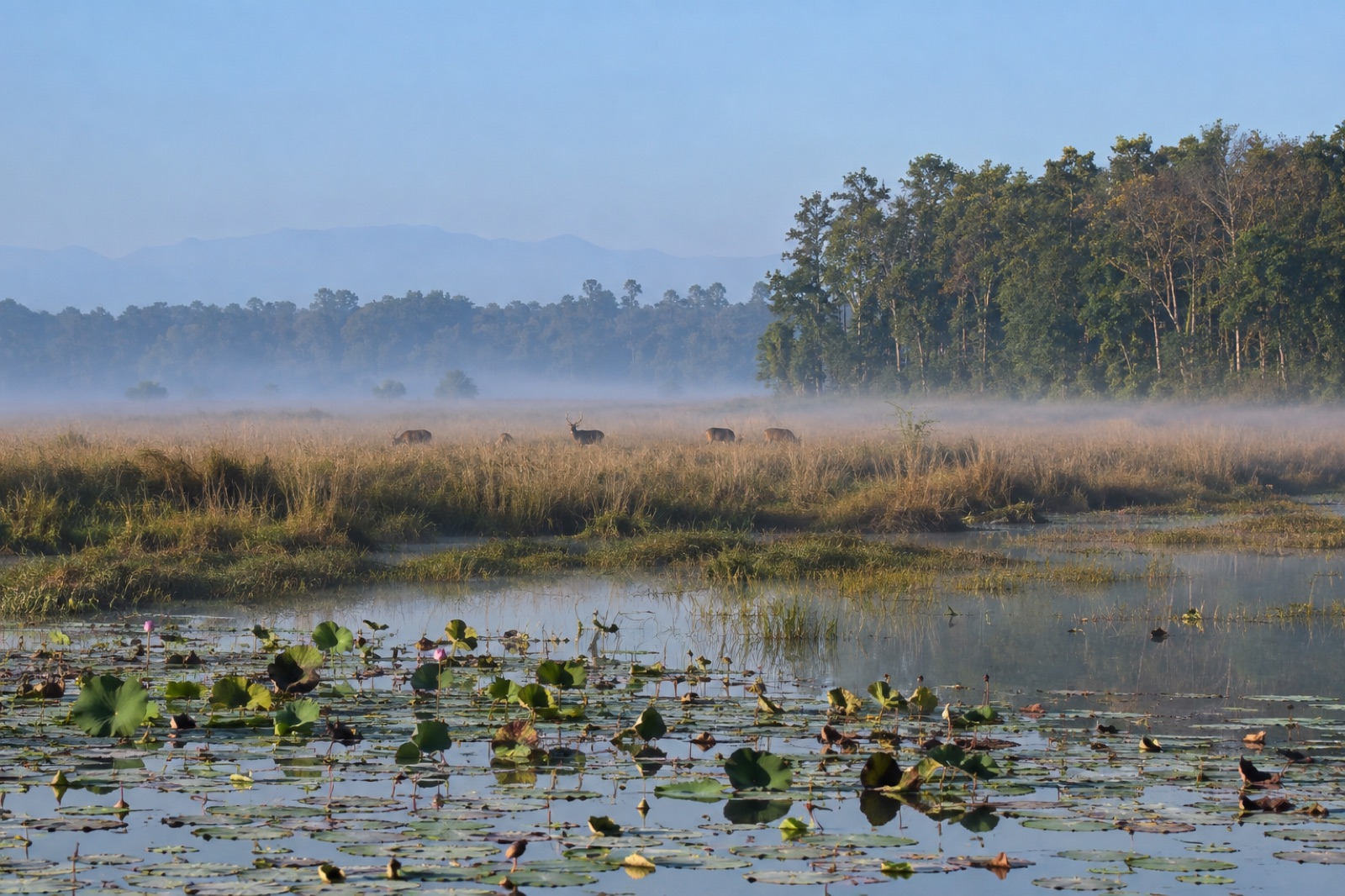
Make the region's wildlife your priority. Take a safari into Suklaphanta National Park, whose open grasslands hold one of the world's largest herds of swamp deer plus tigers and elephants. Then bird the lakes and marshes of the Ramsar-listed Ghodaghodi Lake, one of the finest wetland sites in the Terai.
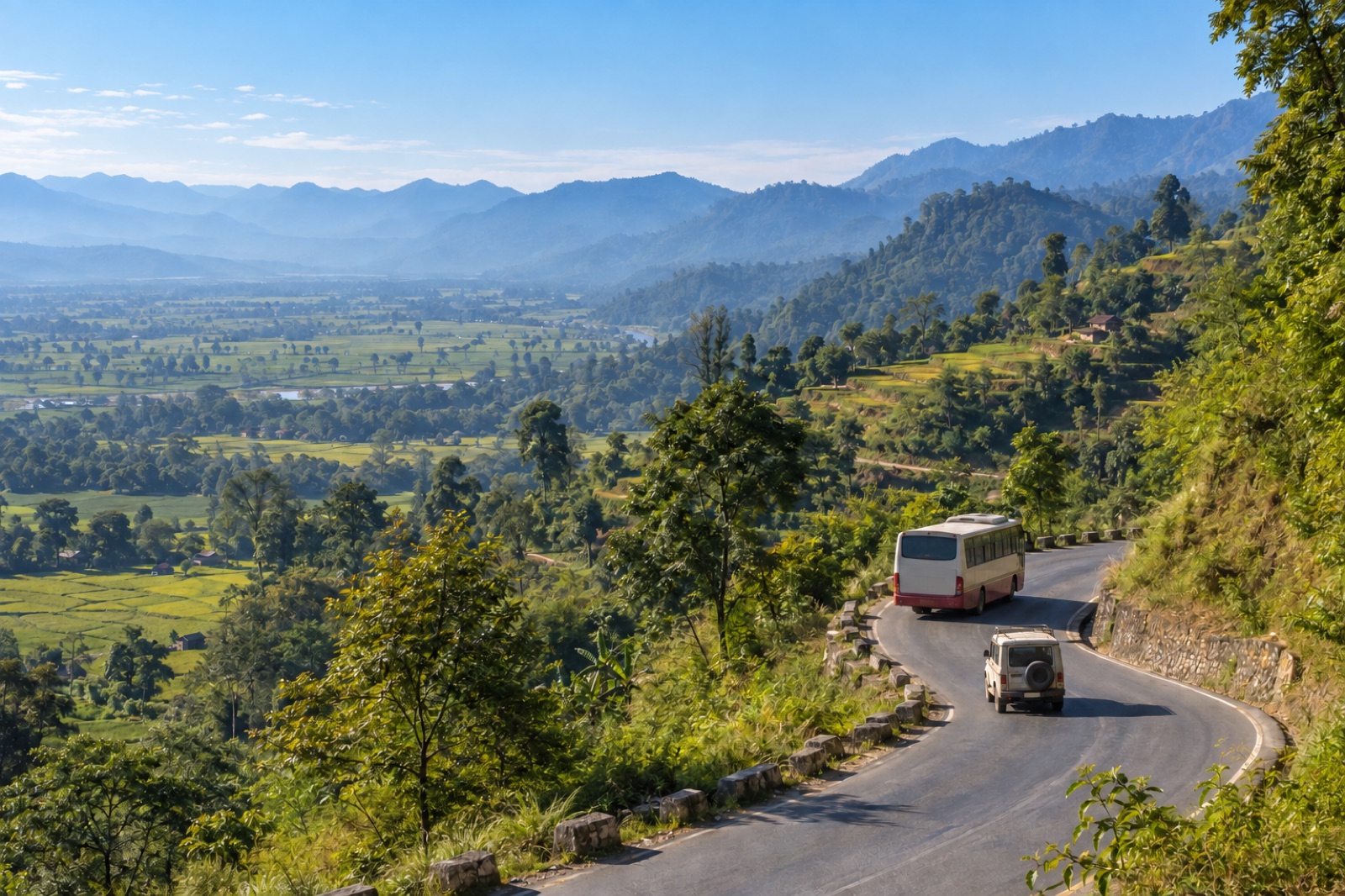
For scenery, head east to the Karnali River at Chisapani, where Nepal's largest river surges onto the plains beneath a landmark suspension bridge, and unwind in the landscaped lawns and riverside paths of Tikapur Park. The leafy highway suburbs of Godawari and Attariya mark the junction north to the hills. Tap any spot below for what to see, when to go and how to find it — and read the full city overview in our Dhangadhi travel guide.
A suggested two days
Because the far-west is so hot, plan around the cooler hours. Spend your first morning on a Suklaphanta safari, watching deer graze the phantas at dawn, then rest through the fierce midday. On day two, bird the marshes at Ghodaghodi Lake early, then drive out to the Karnali at Chisapani in the late afternoon light. Round things off with an evening stroll in Tikapur Park.
What makes Dhangadhi different
What sets Dhangadhi apart is access to genuinely wild, lightly visited places. While Chitwan and even Bardia draw steady crowds, the wildlife and wetlands of the far-west Terai remain quiet, with phantas and Ramsar lakes you may have almost to yourself. The city is also the doorway to Khaptad and the far-western hills — see our gateway to the far-west and Khaptad guide.
Good to know
- Beat the heat: Dhangadhi is among Nepal's hottest cities — explore in the early morning and evening and pick your dates with the best time to visit Dhangadhi.
- Getting around: Auto and electric rickshaws cover the flat city cheaply; arrange a jeep or guide for Suklaphanta and Ghodaghodi.
- Plan ahead: Suklaphanta safaris and remote sites are best arranged in advance — see the Terai lowlands for wider context.
What to do

Wildlife & nature


Frequently asked questions
What are the must-see attractions in Dhangadhi?+
The unmissable sights are Suklaphanta National Park, with its swamp deer and tigers, and the Ramsar-listed Ghodaghodi Lake for wetland birding. Add the Karnali River at Chisapani, riverside Tikapur Park and the highway suburbs of Godawari and Attariya on the way to the hills.
How long should I spend in Dhangadhi?+
A day covers the city, Tikapur and the nearby suburbs. To do the region justice, allow two to three days so you can take a safari at Suklaphanta National Park, bird at Ghodaghodi Lake and reach the Karnali at Chisapani before heading up to Khaptad.
Is Dhangadhi good for wildlife and birdwatching?+
Yes — the far-west Terai around Dhangadhi is one of Nepal's best and least-crowded wildlife regions. Suklaphanta holds a famous swamp-deer herd and tigers, while Ghodaghodi Lake is a Ramsar wetland alive with waterbirds, making the area a rewarding, quiet alternative to the busier parks.
What is the best time to visit Dhangadhi's sights?+
October to March brings the most bearable weather and the best wildlife viewing, as Dhangadhi is one of Nepal's hottest places. Winter is ideal for Suklaphanta safaris and Ghodaghodi birding, while the summer heat and monsoon make sightseeing uncomfortable.